
Drainage Installation & Repair
in the Quad Cities
Tired of standing water, muddy grass, or rain washing out your landscaping? Topscape installs and repairs landscape drainage systems throughout the Quad Cities, with solutions planned around your property and where the water needs to go.
Licensed & Insured
Experienced Team
Site-Specific Drainage Plans
Serving the Quad Cities
Schedule Your Consultation
Fill out the form and we'll get back to you promptly
Landscape Drainage Installation & Repair in the Quad Cities
Standing water, muddy grass, and washed-out planting beds can make your yard difficult to use. Based in Moline, Illinois, Topscape installs and repairs landscape drainage systems throughout the Quad Cities, including Rock Island, East Moline, Silvis, Coal Valley, Davenport, and Bettendorf.
We assess your soil, elevations, and water flow before recommending French drains, swales, dry creek beds, or other drainage improvements. Your plan can address an existing problem or be coordinated with landscape design and retaining wall construction.
- Site-Specific Drainage Plans
- New Systems & Existing Repairs
- Local Quad Cities Team
- Grading & Runoff Management
Explore Landscape Drainage Ideas
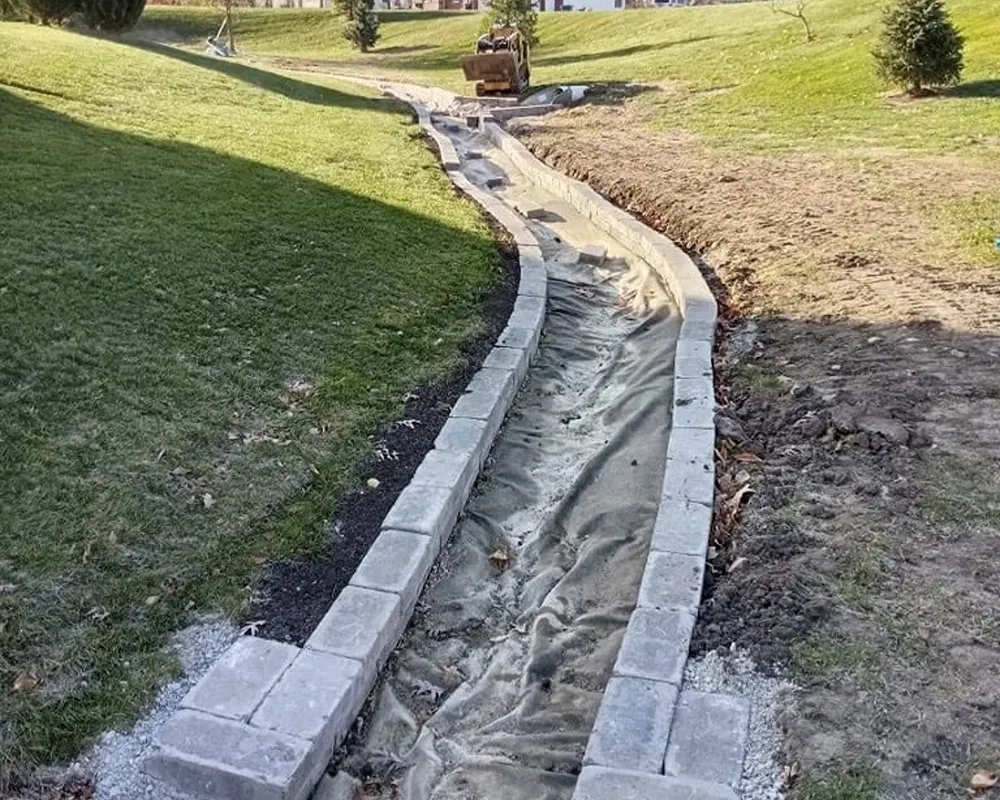
See how drainage features can fit into your landscape. Explore our drainage solutions to learn which approach may suit your yard.
Fix the Cause of Your Drainage Problem
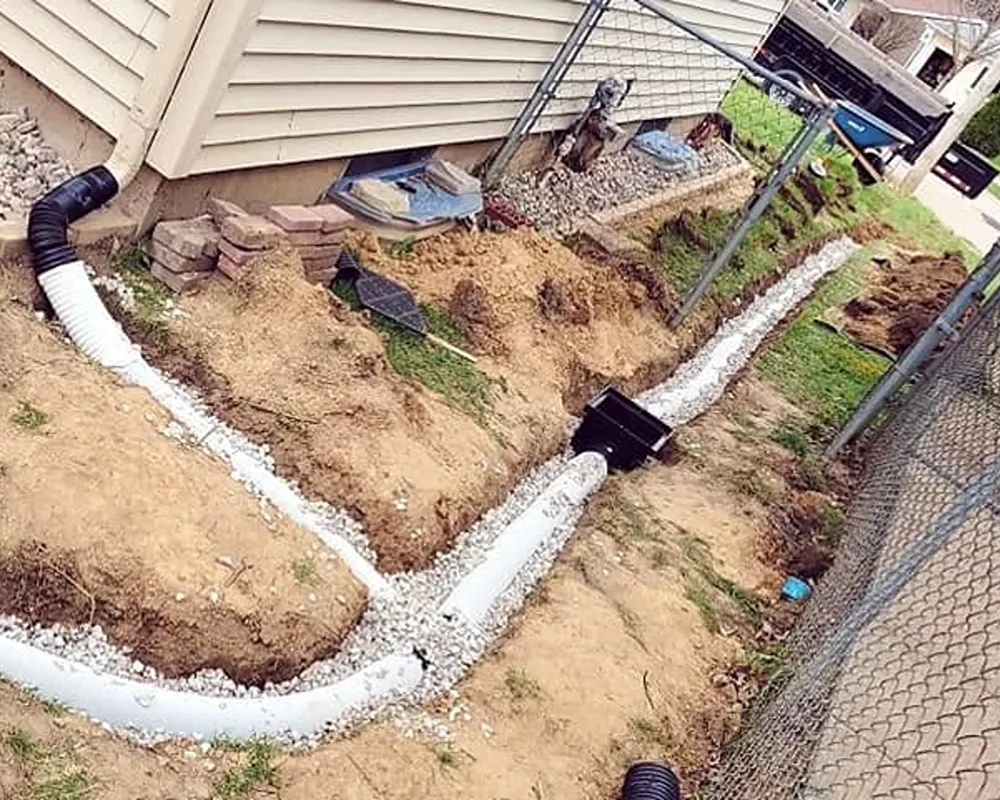
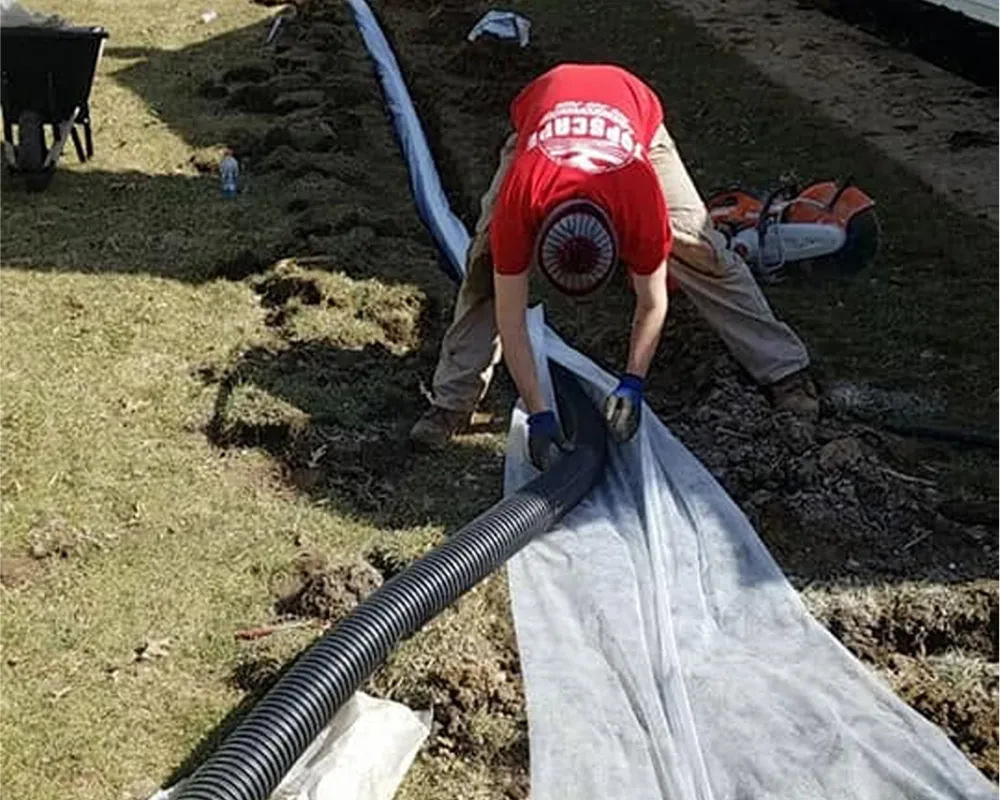
A drain that overflows or a lawn that stays muddy may need more than another layer of soil. Topscape helps Quad Cities homeowners identify drainage problems and repair or improve existing systems. We assess collection points, visible pipework, grading, and outlets to understand where water is getting trapped.
The solution may involve clearing a blockage, replacing damaged drainage components, redirecting downspout runoff, or adding a new collection route. Where slopes or landscaping contribute to the problem, we can coordinate landscape improvements and retaining walls with drainage as part of the plan.
- Repair damaged drainage systems
- Redirect roof and surface runoff
- Address pooling and soggy areas
- Plan grading and outlet improvements

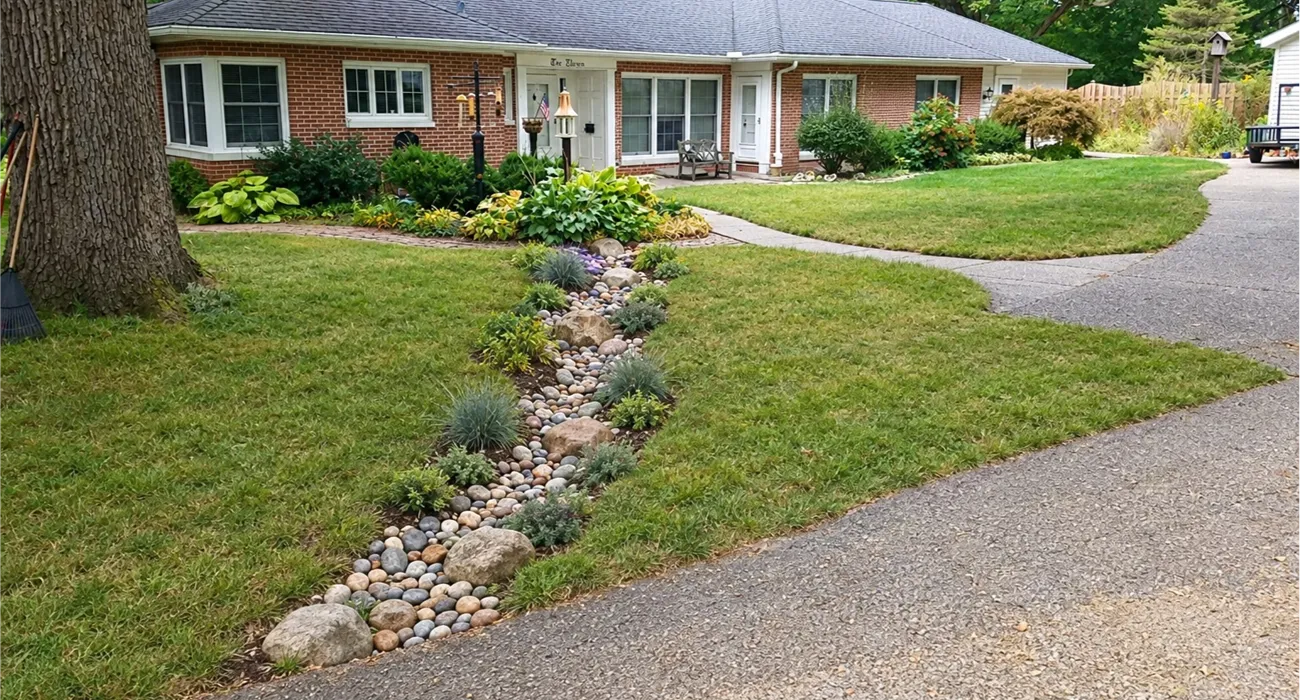
Picture a Dry Creek Bed in Your Landscape
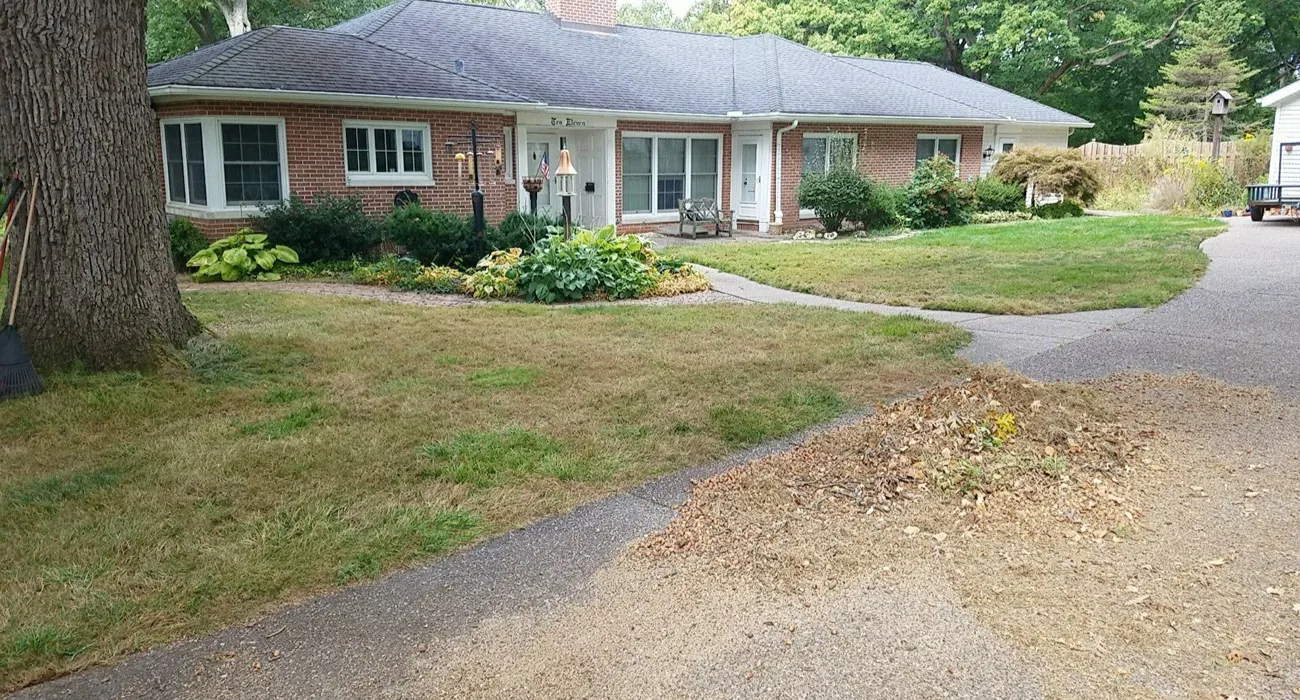 Before
 Design Concept
Turn a Drainage Feature into a Landscape Idea
Compare the original yard with an illustrative dry creek bed concept. This preview offers design inspiration, not a completed installation or a verified drainage plan.
Wondering how a dry creek bed could look alongside your lawn or planting beds? Our landscape visualizer uses a photo of your property to help you explore stone, planting, and layout ideas. Picture how a visible drainage feature could fit into the rest of your yard.
Bring your preferred concept to your consultation. We’ll assess water flow, soil conditions, elevations, and a suitable outlet before recommending a drainage solution. The visual preview helps communicate your ideas, while the site assessment determines what will work.
- Preview ideas using your yard photo
- Explore stone and planting combinations
- Picture a creek bed within your landscape
- Bring your ideas to the consultation
Explore Our Landscape Drainage Solutions
Standing water, soggy grass, and washed-out planting beds can have different causes. Explore the options below to understand how each solution works and where it may fit your property.
What Homeowners Say About Working with Topscape
When water problems keep coming back, you want clear answers and a plan you understand. Topscape serves homeowners in Moline, Rock Island, Bettendorf, Davenport, and surrounding Quad Cities communities. Read customer reviews about communication, workmanship, and the experience of working with our team on their landscape and outdoor improvement projects.
Drainage Installation & Repair Throughout the Quad Cities
Based in Moline, Illinois, Topscape helps homeowners across the Quad Cities address standing water, soggy lawns, and landscape erosion. We plan French drains, swales, and dry creek beds around your property’s conditions, with repairs to existing drainage systems and grading improvements where needed.
- Augustana
- Bettendorf, IA
- Blackhawk
- Central Rock Island
- Chippendale
- Coal Valley, IL
- Davenport, IA
- East Moline, IL
- Eldridge, IA
- Highlands
- Longview
- Milan, IL
- Moline, IL
- Quad Cities
- Rock Island, IL
- Silvis, IL
- Springdale
Paver Patio Frequently Asked Questions
Planning a new patio in the Quad Cities? Here are answers to common questions about replacement, installation, materials, and maintenance.
How much does a new paver patio cost?
Patio pricing depends on the size, paver selection, excavation, site access, and preparation your property needs. Removing an existing patio or adding steps, retaining walls, or other features also affects the total. During your consultation, we’ll discuss your priorities and assess the site so we can recommend a scope that fits your goals.
Can you replace my concrete patio with pavers?
Yes. Topscape can remove an existing concrete patio and install a new paver patio. We assess the ground beneath it, drainage, and the height of nearby doors and steps before planning the replacement. This is also an opportunity to change the shape or add more room for furniture.
Can you make my existing paver patio larger?
Often, yes. We’ll check the condition of your existing patio, its elevations, and whether matching pavers are available. Depending on what we find, we may recommend a matching extension, a complementary border or material, or rebuilding the patio as one larger space.
How long does paver patio installation take?
The timeline depends on the patio’s size, demolition, site conditions, and any additional features. Weather and material availability can also affect scheduling. Once the design and scope are established, we’ll explain the expected construction schedule and how the work will affect access to your yard.
How do you address drainage beneath and around the patio?
We consider drainage and elevations before installation begins. Our planning accounts for the patio’s slope, nearby foundations, and how water moves through your yard. Excavation and base preparation are planned around the site, with additional drainage improvements recommended when needed.
Can you help me choose paver colors and patterns?
Yes. Through our landscape design process, we help you compare paver styles, colors, laying patterns, and borders that complement your home. We also plan the layout around your furniture, doors, and walking routes so the finished patio is comfortable to use.
What maintenance does a paver patio need?
Routine care includes sweeping away debris, cleaning spills, and checking the joints between pavers. Joint sand may need replenishing over time. Cleaning products, pressure washing, sealers, and winter deicers should be selected according to the paver manufacturer’s recommendations.
Can you plan a patio with other backyard improvements?
Yes. Your patio can be planned alongside steps, walkways, retaining walls, planting beds, and outdoor living features. For a larger backyard renovation, we coordinate the layout, materials, elevations, and access. If you prefer to build in phases, an overall plan helps guide future additions.
Clear Answers Before the Digging Starts
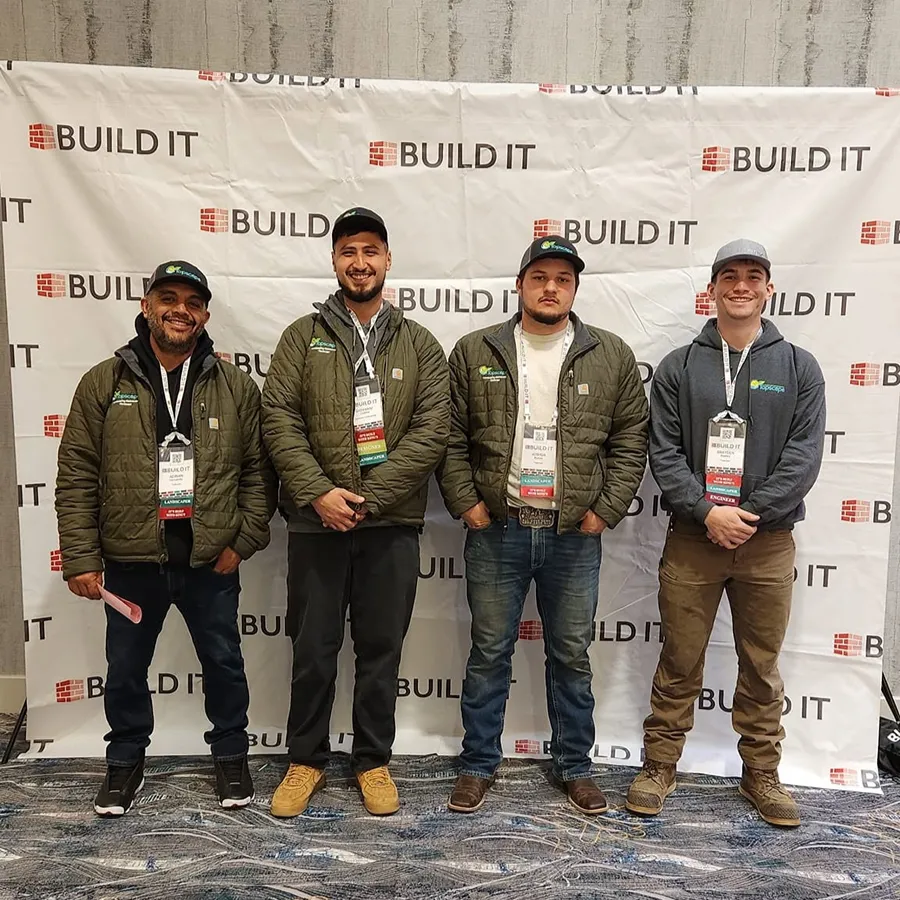
You should understand what is causing the water problem and how the proposed work will address it. Serving Moline and the surrounding Quad Cities, Topscape explains your drainage options, the planned route, and the areas affected by installation. Our team coordinates excavation, drainage improvements, and the landscape restoration included in your quote, with clear communication throughout the project.
- Locally Owned & Operated
- Drainage Options Explained Clearly
- Plans Based on Your Property’s Conditions
- Clear Estimates & Project Communication
- Coordinated Excavation & Installation
- Landscape Restoration Scope Discussed Up Front